When investing in a high-end kitchen or bathroom renovation, the longevity of materials is often the deciding factor between a standard upgrade and a legacy improvement. Homeowners frequently ask exactly how long they can expect their surfaces to remain functional and beautiful. The short answer is that natural stone countertops are designed to last the lifetime of the home, often outliving the very cabinets they sit upon. However, the true lifespan depends on a combination of mineral composition, structural integrity, and the quality of the initial fabrication.
At Galaxy Tops, we view stone not just as a surface, but as a permanent architectural element. Understanding the nuances of durability helps set realistic expectations for your investment and ensures that the material you choose aligns with your lifestyle.
The Lifetime Durability of Natural Stone Countertops
The primary appeal of natural stone is its inherent geological strength. Unlike laminate, which relies on adhesives and particle board, or quartz, which uses resin binders that can be sensitive to extreme heat, natural stone is a product of millenia of heat and pressure. When we discuss the durability of natural stone countertops, we are looking at materials that have already existed for millions of years before reaching your kitchen.
In a residential setting, “lifetime” typically refers to a 30- to 50-year horizon. Most natural stones—specifically granite, quartzite, and marble—will easily surpass this mark without losing their structural properties. While aesthetic trends may change, the stone itself remains a constant, providing a long-term investment that adds measurable resale value to a property.
The Science of Stone Longevity
The lifespan is largely dictated by the Mohs scale of mineral hardness.
- Granite and Quartzite: These are among the hardest materials available, resistant to scratching from stainless steel knives and unaffected by high cooking temperatures.
- Marble and Limestone: These are softer, calcium-based stones. While they are equally permanent in terms of structure, they are “living” finishes that develop a patina over time. Their lifespan isn’t shorter, but their appearance evolves.
*The Mohs scale measures a mineral’s hardness by its ability to scratch or be scratched by others, ranging from 1 (softest) to 10 (hardest).
Factors That Influence the Lifespan of Stone Countertops
While the raw material is nearly indestructible, several environmental and human factors influence how well a countertop ages. A professional countertop installation is the most critical variable in preventing premature failure.
1. Structural Support and Sub-Flooring
A stone slab is incredibly heavy, often weighing between 15 and 22 pounds per square foot. If the cabinetry is not perfectly level or if the sub-floor has significant flex, the stone is placed under “flexural tension.” Stone is strong under compression but weak under tension. Over decades, a house that settles unevenly can put stress on the stone, making the precision of the initial leveling a vital component of its longevity.
2. Sealing and Porosity
Most people worry about staining when they consider the lifespan of stone countertops. Porosity varies by stone type. High-density granites may never require sealing, while lighter marbles need regular treatments to prevent oils and pigments from migrating into the pores. A well-maintained seal doesn’t just prevent stains; it protects the internal bond of the minerals from acidic erosion.
3. Edge Profiles and Impact Resistance
The choice of edge detail affects durability. Sharp, “eased” edges are more prone to micro-chipping if struck by a heavy cast-iron pot. High-end fabricators often recommend slightly rounded profiles, such as a bullnose or a large-radius cove, which dissipate impact energy more effectively and reduce the likelihood of edge wear over twenty or thirty years.
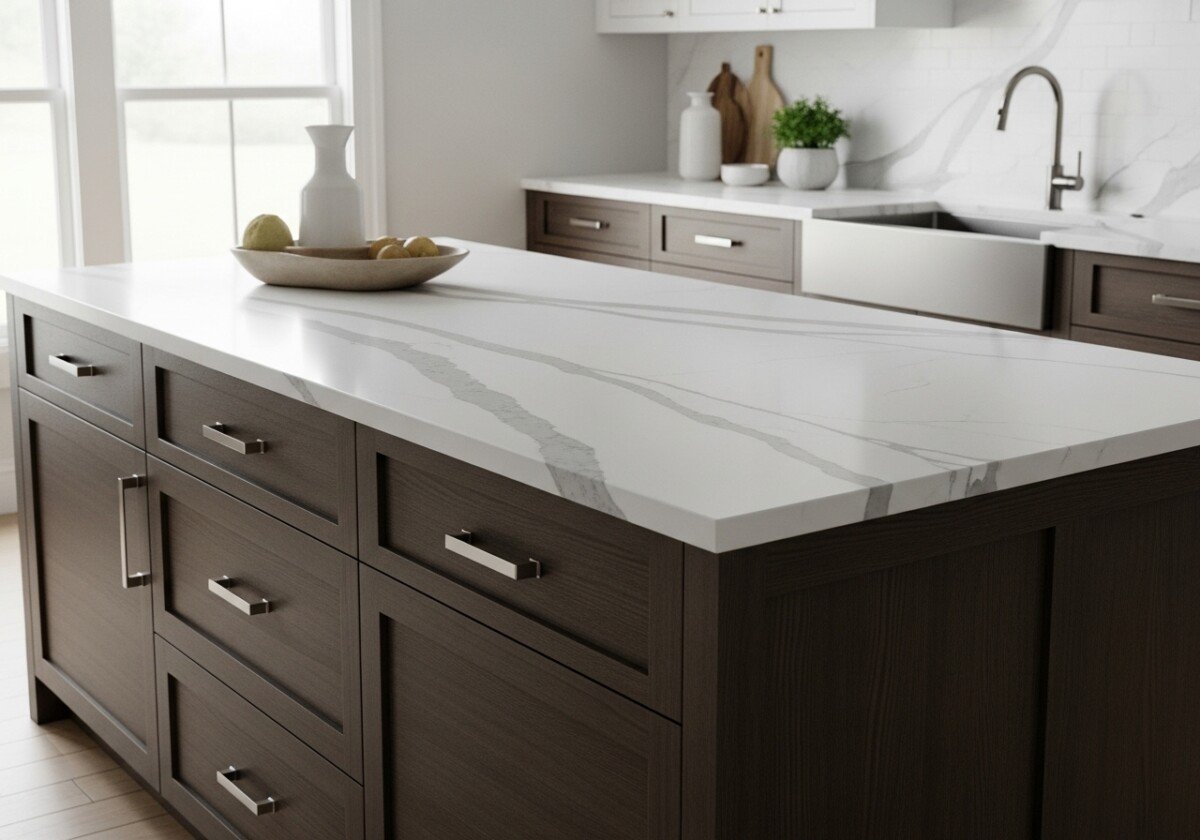
Breaking Down the Granite Countertop Lifespan
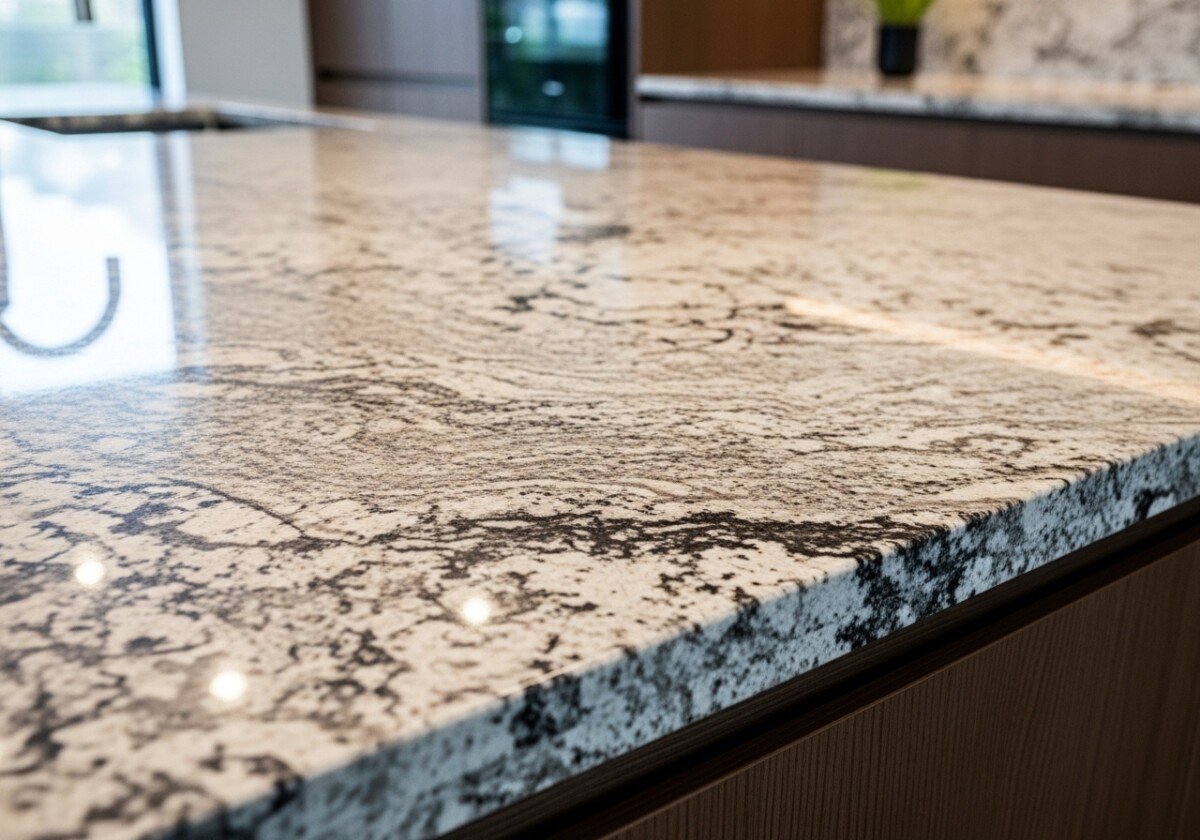
Granite remains the gold standard for durability in high-traffic kitchens. A granite countertop lifespan is effectively indefinite. Because granite is composed primarily of quartz and feldspar, it is chemically resistant to most household acids and thermally stable.
From a fabrication perspective, we rarely see granite “wear out.” Instead, we see it replaced during secondary renovations purely for aesthetic updates. If you choose a timeless granite color, it is entirely possible for that countertop to serve three generations of a family. It does not warp, it does not melt, and it does not lose its luster if cleaned with pH-neutral solutions.
Addressing Common Concerns: Do Stone Countertops Crack?
One of the most frequent anxieties among homeowners is the fear of structural failure. Do stone countertops crack? Under normal residential conditions, the answer is almost always no. True “cracks” that go through the full thickness of the slab are exceedingly rare and are usually the result of:
- Extreme Thermal Shock: While stone is heat-resistant, placing a 500-degree pot directly on a freezing cold slab can cause localized expansion.
- Physical Abuse: Standing on a countertop to change a lightbulb or reach a high cabinet focuses hundreds of pounds of pressure on a small area, which can cause a fracture, particularly near cutouts for sinks or cooktops.
- Fissures vs. Cracks: It is important to distinguish between a crack and a natural fissure. Fissures are naturally occurring crystalline structures in the stone that do not compromise its integrity. A professional fabricator inspects every slab to ensure these features are stable before the stone ever enters your home.
Maintenance for Decades of Performance
To ensure your surfaces look as good in year twenty as they did on day one, a minimalist maintenance routine is best. The “less is more” approach prevents the buildup of waxes or chemicals that can dull the stone’s natural clarity.
- Daily Cleaning: Use warm water and a microfiber cloth. Avoid “all-purpose” cleaners containing lemon, vinegar, or bleach, as these can slowly degrade the sealer or etch the surface of softer stones.
- Annual Check-ups: We recommend a simple “water drop test” once a year. Place a few drops of water on the surface; if it beads up, your seal is intact. If it soaks in and darkens the stone within a few minutes, it is time for a fresh application of a high-quality impregnating sealer.
- Polishing: If a stone loses its shine after a decade of heavy use, it can be professionally diamond-polished in-situ. This removes a microscopic layer of the surface to reveal fresh, untouched stone beneath.
Stone Countertops: Long-Term Value and ROI
When evaluating the cost of natural stone, it is helpful to look at the “cost per year” rather than the initial ticket price. Cheap synthetic alternatives often need to be replaced every 7 to 10 years due to scratching, staining, or heat damage. In contrast, the stone countertops long-term value is rooted in their permanence.
Because stone is a premium material, it consistently ranks as one of the highest-ROI (Return on Investment) items in a home remodel. Potential buyers recognize the value of a kitchen that is “move-in ready” with surfaces that require no future capital expenditure. It is an investment in both the utility of your daily life and the equity of your property.
Choosing the Right Partner for Your Investment
The longevity of your countertops is determined long before the stone arrives at your door. It begins in the quarry, continues through the selection of a premium slab, and culminates in the precision of the fabrication process. A countertop is only as durable as its weakest point, which is why we emphasize the importance of expert templating and seam placement.
At Galaxy Tops, we understand that selecting a natural stone surface is a significant decision for your home. Our role is to provide the technical expertise and craftsmanship required to ensure that your chosen material performs flawlessly for decades. We treat every project with the attention to detail that a permanent architectural feature deserves, ensuring that the natural beauty of the stone is matched by its structural longevity.
FAQs
How long do granite countertops last compared to quartz?
While both materials are exceptionally durable, granite countertops can last over 100 years because they are 100% natural volcanic rock. In contrast, quartz countertops (engineered stone) have an average lifespan of 25 to 30 years due to the resins used in their manufacturing, which can degrade or discolor over time if exposed to high heat or UV light.
Can natural stone countertops crack after several years?
Natural stone countertops are structurally stable and do not “wear out” or crack on their own. However, cracks can occur if the house settles significantly or if the stone is subjected to extreme weight or thermal shock. Professional countertop installation minimizes this risk by ensuring the surface is perfectly leveled and supported by high-quality cabinetry.
What is the most durable natural stone for a high-traffic kitchen?
For homeowners prioritizing a long-term investment, granite and quartzite are the most durable options. Quartzite, in particular, is one of the hardest natural minerals available (ranking 7-8 on the Mohs scale), making it more resistant to scratches and heat than almost any other surface on the market in 2026.
Do I need to reseal natural stone countertops every year?
Not necessarily. The frequency of sealing depends on the stone’s porosity. Many high-density granites only require sealing every 3 to 5 years. You can easily test this by placing a few drops of water on the surface; if the water beads up, the seal is still effective. If it absorbs, it is time for a professional-grade reappointment.
Is natural stone more expensive than man-made alternatives in the long run?
Initially, natural stone may have a higher price point than laminate or mid-range solid surfaces. However, because natural stone countertops never need to be replaced and significantly increase the resale value of a home, they offer a lower “cost per year” over the lifetime of the property, making them a superior financial choice for serious renovations.
Reach out to us today to schedule a consultation or to request a free estimate. Our team is ready to help you select a surface that will serve as a centerpiece of your home for a lifetime, providing the lasting value and timeless beauty that only natural stone can offer.